
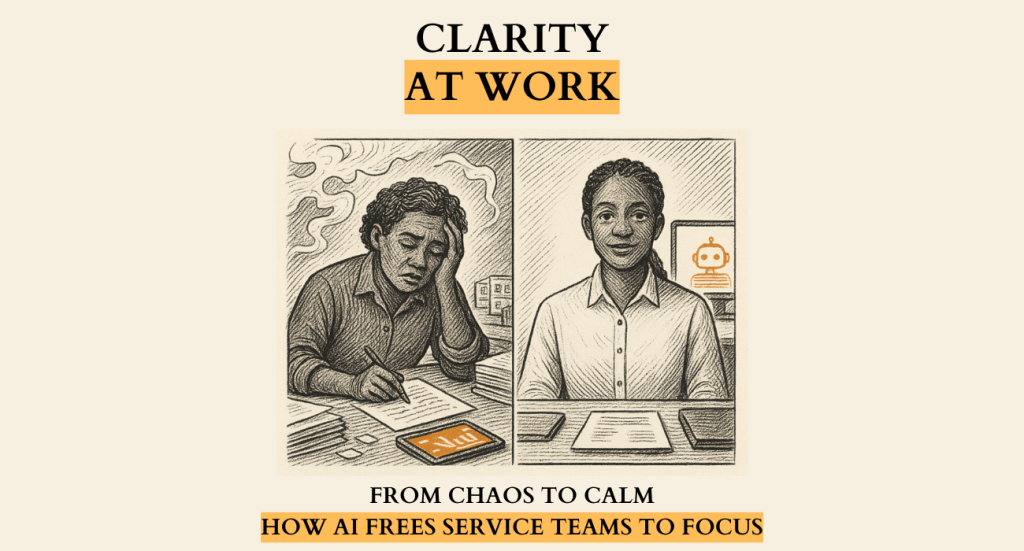
What Is AI-Driven Employee Productivity?
AI-driven productivity is not about working faster. It is about freeing humans from repetitive, low-value tasks so they can focus on creative and strategic work.
In service businesses like HVAC, plumbing, roofing, med spas, or electrical, that means fewer hours spent on scheduling, paperwork, and chasing payments, and more time spent serving customers and growing the business.
Instead of tracking hours manually or double-checking job costs, modern AI tools summarize meetings, manage inboxes, predict workload bottlenecks, and help people make better decisions with less friction. The goal is not more output per hour. It is better energy allocation per day.
How Does It Work?
AI enhances productivity by observing patterns in communication, workflow, and data. Deployed correctly, it becomes a second nervous system that listens, organizes, and responds faster than human bandwidth allows.
- Task automation: Tools like Zapier, Make, and ClickUp AI handle repetitive processes such as creating estimates, sending invoices, confirming appointments, and routing approvals.
- Insight generation: Systems like PlotPath or Notion AI highlight trends, showing which service types are most profitable, which technicians are overloaded, and where cashflow or morale is getting tight.
- Decision support: Chatbots and copilots act as thinking partners, helping office staff and managers find answers instantly rather than digging through spreadsheets or email threads.
What Are the Benefits and Challenges?
Benefits
- Clarity over chaos. Dispatchers, office managers, and field techs see what matters most each day.
- Less burnout. Automation removes the mental weight of scheduling, approvals, and follow-ups.
- Faster feedback loops. Owners know which jobs are most profitable and where margins slip, in real time.
- Higher engagement. Employees spend more time doing the work that brings results and satisfaction.
Challenges
- Data overload. Too many tools can create new noise.
- Trust gap. Employees may fear AI is replacing oversight with surveillance.
- Implementation friction. Automation without workflow redesign speeds up old inefficiencies.
The key is not simply adding AI but aligning it with human motivation.
What Are the Steps to Introduce AI Without Killing Morale?
- Start with a listening phase. Ask your team which tasks feel repetitive or draining, such as dispatch paperwork, estimate follow-ups, inventory tracking, or bookkeeping tasks.
- Map your workflow. Identify bottlenecks like manual data entry, delayed invoicing, inconsistent time tracking, or slow job costing.
- Test with one department. Pilot automated appointment reminders, technician time capture, or parts reordering, and measure both time saved and stress reduced.
- Integrate gradually. Expand automation where it clearly helps humans perform better, such as connecting your CRM with QuickBooks and your scheduling app for seamless handoffs.
- Reinvest saved time. Use reclaimed hours for training, marketing, or customer experience, not just more work.
AI should simplify the workday, not crowd it with dashboards and alerts.
What Is the Difference Between AI Efficiency and AI Empowerment?
Most companies chase AI efficiency, which focuses on cutting time, cost, or headcount. Leaders focused on AI empowerment use it to make employees feel more capable, confident, and creative.
- Efficiency means replacing what people do.
- Empowerment means enhancing what people can do.
For a plumbing or HVAC company, empowerment might mean giving technicians AI-generated job summaries, automated quote follow-ups that keep schedules full, and real-time parts availability so they can finish more jobs with less stress.
What Are the Best Tools for Human-Centered Productivity?
- Scheduling and communication: Housecall Pro, Jobber, or ServiceTitan for AI-assisted dispatching and customer updates.
- Email and meetings: Superhuman, Otter.ai, and Reclaim for summarizing and scheduling.
- Project flow: Notion AI, ClickUp AI, and Motion for managing operations, estimating, and capacity planning.
- Automation glue: Zapier, Make, or n8n for connecting field apps, QuickBooks, and dashboards.
- Insight layer: PlotPath for clear visibility into profit per job, cashflow patterns, and owner-friendly reporting that drives decisions.
- Well-being and focus: Clockwise or Rise for balancing workloads across the team.
The best setup is not the one with the most tools. It is the one that makes Monday feel less heavy for everyone in the business.
Final Thought
AI is at its best when it restores our humanity at work, not when it mimics it. In service-based companies, that might look like technicians who end their day on time, office managers who get home without unfinished estimates, and owners who have the clarity to plan growth instead of chasing invoices.
Automation is not the enemy of meaning. It is the opportunity to return to it. Leaders who understand this will build companies where productivity and happiness rise together.


