
Fractional CFO Services
Find Real Profit
Fractional CFO Services Without the Full-Time Overhead
A full-time CFO costs $200,000 or more per year. Most growing businesses need the thinking, not the headcount.
Fractional CFO services provide strategic financial leadership on a part-time or ongoing basis, without the cost or commitment of a full-time hire. They work by embedding a senior financial advisor into a business’s operations — handling cash flow forecasting, margin analysis, scenario planning, and financial decision support at the level a business needs, scaled to what it can support. When fractional CFO services function correctly, a business owner stops making consequential financial decisions alone and starts acting on clear, forward-looking financial intelligence. When the function is absent, decisions default to instinct, growth outpaces visibility, and financial risk accumulates silently until it surfaces as a problem that is harder to solve.
This page covers what fractional CFO services include, how they differ from bookkeeping and tax advisory, who they are built for, and what it looks like to engage PlotPath as your outsourced financial leadership partner.
What a Fractional CFO Actually Does
A CFO is not a bookkeeper and is not a CPA. Those roles are necessary. They are not the same thing.
A bookkeeper maintains accurate financial records. A CPA manages tax compliance and prepares returns. A CFO interprets what those records reveal about the health and trajectory of the business, and translates that interpretation into decisions.
Fractional CFO services bring that interpretive function into a business on a part-time basis. The scope includes cash flow forecasting, burn rate analysis, pricing and margin evaluation, hiring runway modeling, scenario planning, and financial communication with investors, lenders, or board members. The CFO is not recording transactions. The CFO is telling you what the transactions mean and what to do next.
For most businesses doing $1 million to $10 million in annual revenue, a fractional or part-time CFO is the economically rational structure. The need for strategic financial leadership is real. The need for a $200,000 full-time hire is not.
The Problem a Fractional CFO Solves
Most growing businesses reach a point where the financial complexity of the business has outpaced the owner’s ability to manage it alone. Revenue is real. Profit is unclear. Cash is unpredictable. Decisions that affect hiring, pricing, debt, and investment are being made without a clear financial model underneath them.
This is not a failure of effort. It is a structural gap.
The owner is running sales, managing operations, leading the team, and trying to read financial reports that were designed for accountants, not operators. The CPA is available quarterly and focused on tax, not daily financial leadership. The bookkeeper is producing accurate records that no one is fully interpreting.
The fractional CFO fills the gap between the records that exist and the decisions that need to be made. When that gap closes, the business stops running on instinct and starts running on financial intelligence.
How PlotPath Fractional CFO Services Work
PlotPath does not offer CFO advisory as a standalone product. It is integrated into a financial operating system that begins with accurate, timely bookkeeping and builds into forward-looking financial leadership.
That structure matters. A fractional CFO without reliable underlying books is giving advice on numbers that cannot be trusted. PlotPath ensures the foundation is clean before the advisory layer begins. The result is financial leadership that is grounded in data, not approximations.
The CFO advisory layer includes:
- Cash flow forecasting with a forward-looking view of 13 weeks to 12 months
- Burn rate and runway analysis for businesses managing tight margins or growth investment
- Margin and profit driver analysis that identifies which revenue streams are producing and which are consuming
- Pricing guidance grounded in actual cost structure and margin targets
- Scenario modeling for decisions involving hiring, debt, investment, or expansion
- Preparation for investor conversations, lender meetings, or due diligence processes
- Monthly owner-ready reporting with plain-English insights and clear next steps
- Direct access to a CFO-level advisor who knows the business and can speak to what the numbers mean
The advisory relationship is ongoing, not episodic. PlotPath is not a firm you call when something goes wrong. It is a firm embedded in the monthly rhythm of your business so that problems surface before they become crises.
Fractional CFO vs. Part-Time CFO vs. Hourly CFO
These terms are often used interchangeably. The distinctions are worth understanding.
| Model | Structure | Best For | Limitation |
|---|---|---|---|
| Fractional CFO | Ongoing retainer, dedicated hours per month | Businesses needing consistent financial leadership | Requires a defined scope to work well |
| Part-time CFO | Scheduled days or hours per week | Businesses with predictable, recurring advisory needs | Less flexible for variable demand |
| Hourly CFO | Billed by the hour, project or as-needed | One-time projects or specific financial questions | No continuity between engagements |
| Full-time CFO | Salaried employee, full organizational presence | Businesses at $20M+ or with complex capital structures | Cost and overhead rarely justified below that size |
PlotPath operates on a monthly retainer model that functions as fractional CFO engagement. The scope is defined, the relationship is ongoing, and the advisory depth scales with the business’s needs. There is no hourly billing or project minimums. The engagement is designed for continuity, because financial leadership that disappears between engagements is not financial leadership.
Who PlotPath Fractional CFO Services Are Built For
PlotPath works with service-based businesses and portfolio-stage companies that need strategic financial leadership but are not at the scale where a full-time CFO hire makes sense.
The business owner who benefits most from a fractional CFO engagement is one who has moved past the early stage of just surviving, has real revenue and real complexity, and is making decisions that carry meaningful financial consequence. Hiring decisions. Pricing changes. New service lines. Debt or credit decisions. Investor conversations. These are decisions where the cost of being wrong is high and the value of clear financial input is proportionally high.
PlotPath also serves venture-backed portfolio companies whose finance infrastructure is founder-built and has not kept pace with investor expectations. These companies need financial reporting that is investor-grade, forecasting that supports board communication, and a CFO-level presence that prepares them for the next raise without the overhead of a full-time finance hire.
In both cases, the need is the same: strategic financial leadership that is embedded in the business, grounded in accurate books, and oriented toward decisions rather than compliance.
The Relationship Between Bookkeeping and CFO Advisory
These two functions are not interchangeable. They are sequential.
Accurate bookkeeping services produce the financial records a CFO interprets. Without reliable underlying data, CFO-level guidance is built on approximations. The advice may be directionally reasonable but cannot be precise, because the numbers feeding it are not precise.
PlotPath integrates both functions deliberately. The bookkeeping team maintains clean, current records. The CFO advisory layer interprets those records each month and translates them into forward-looking financial intelligence. The two functions are designed to work together, not to be procured separately and reconciled after the fact.
For businesses that already have a bookkeeper they trust, PlotPath can layer in CFO advisory on top of that existing foundation. For businesses that need both, PlotPath provides the full financial operating system as a single engagement.
What the Fractional CFO Engagement Looks Like in Practice
The engagement begins with a financial baseline review. Before any forward-looking advisory work begins, the PlotPath team reviews the current state of the books, the business’s financial history, and the decisions the owner is facing or anticipating.
From that baseline, the monthly rhythm includes a clean close, owner-ready reporting, and a structured conversation with the CFO advisor about what the numbers reveal and what decisions they inform. That conversation is not a report walkthrough. It is a working session oriented around the questions the owner is actually trying to answer.
Between monthly sessions, the PlotPath team is available for specific questions as they arise. A pricing question before a proposal goes out. A cash flow concern before a hire is made. A financial summary before a lender call. The advisory relationship is designed to be accessible at the moments that matter, not just at the scheduled monthly cadence.
The Team Behind the Advisory
PlotPath is led by Eric Weynand, CPA. Eric is a licensed Certified Public Accountant with direct experience inside operating businesses across service industries. The firm is not a marketplace, a platform, or an offshore service that routes work to anonymous contractors. It is a defined team with a consistent methodology and a principal who is accountable for every engagement.
More than 100 client companies trust PlotPath with their financial operations. The firm maintains 50+ Google reviews that reflect that track record. Named clients include Full Spectrum, Doctor Electric, and Watson’s Charging Stations.
The difference between a fractional CFO engagement and a financial consulting project is continuity. PlotPath is structured for the former. The advisor who joins your monthly rhythm in month one is the same advisor in month twelve.
Frequently Asked Questions About Fractional CFO Services
Q: What is a fractional CFO? A: A fractional CFO is a senior financial executive who provides strategic financial leadership to a business on a part-time or retainer basis. They handle functions like cash flow forecasting, margin analysis, scenario planning, and investor communication — the work a full-time CFO would do — at a fraction of the cost. Fractional CFO services are most common in businesses doing $1 million to $20 million in annual revenue where full-time CFO overhead is not yet justified.
Q: How is a fractional CFO different from a bookkeeper or CPA? A: A bookkeeper records and categorizes financial transactions. A CPA manages tax compliance and prepares returns. A fractional CFO interprets what the financial records reveal about the health and direction of the business and translates that interpretation into decisions. All three roles are distinct and complementary. PlotPath integrates bookkeeping and CFO advisory into a single engagement so the functions reinforce each other rather than operating in isolation.
Q: How much do fractional CFO services cost? A: PlotPath’s Core Finance System, which includes bookkeeping and CFO advisory, starts at $550 per month. Fractional CFO engagements at other firms vary widely based on hours, scope, and experience level. The relevant question is not the monthly cost but the value of the decisions the engagement informs. A single well-supported pricing, hiring, or debt decision typically produces a return that exceeds the annual cost of the engagement.
Q: Do I need a fractional CFO or just better bookkeeping? A: If the primary problem is that the books are messy, inaccurate, or behind, the starting point is bookkeeping. If the books are reasonably clean but the owner is making significant financial decisions without a clear analytical framework, fractional CFO advisory adds the interpretive layer that bookkeeping alone does not provide. Many PlotPath clients start with bookkeeping and expand into CFO advisory as the business grows and the decisions become more consequential.
Q: Can a fractional CFO help with investor or lender conversations? A: Yes. Preparing financial summaries, forecasts, and scenario models for investor conversations, board meetings, or lender due diligence is a core fractional CFO function. PlotPath works with both growth-stage service businesses navigating debt or credit decisions and venture-backed portfolio companies preparing for their next raise.
Q: How many hours per month does a fractional CFO engagement require? A: PlotPath operates on a monthly retainer structure rather than hourly billing. The engagement scope is defined upfront based on the business’s complexity and advisory needs. Most clients find that a consistent monthly rhythm — close, reporting, and a working advisory session — covers the majority of their ongoing financial leadership needs, with additional access available for specific decisions as they arise.
Q: Is a part-time CFO the same as a fractional CFO? A: The terms are used interchangeably in most contexts. Part-time CFO typically implies a scheduled time commitment — specific days or hours per week. Fractional CFO is broader and can include retainer arrangements, project-based work, or advisory relationships that do not follow a fixed schedule. PlotPath’s model is a monthly retainer that functions as an embedded fractional CFO engagement with consistent access between scheduled sessions.
Fractional CFO Services Starting at $550 Per Month
For service business owners and portfolio-stage companies facing consequential financial decisions without a clear analytical framework, fractional CFO services produce forward-looking financial intelligence by combining accurate bookkeeping, owner-ready reporting, and embedded CFO-level advisory in one consistent engagement. If you are looking for a part-time CFO who knows your business and can be reached when a decision matters, PlotPath is built for that.
Your Outsource CFO Team

Eric Weynand
CEO

Gary Beebe
CFO

Craig Trupo
CFO
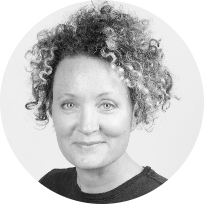
Rachel Armentor
CPA Financial Controller
Let's figure out your baseline
Built for Business Owners Who Want Control
PlotPath was created for operators who are tired of guessing at their numbers. We believe financial clarity is not optional at scale. Clean books, structured back office systems, and strategic CFO guidance are the foundation of profitable growth.
But before any of that works, you need an honest baseline. The assessment gives you a clear snapshot of where your financial foundation actually stands today.
We Follow Best Practices
- Monthly reconciliations so nothing slips through the cracks
- Clear, easy-to-read reports you can actually use
- Strong internal controls to reduce errors and risk
- Forward-looking cash flow planning to prevent surprises