
Businesses often follow seasons that go beyond the weather outside. However, the seasons many business owners face are less predictable than average temperatures and humidity.
Revenue ebbs & flows, expenses pop up out of nowhere, and market conditions shift at a pace that can leave your head spinning.
The ability to remain disciplined and consistent with financial management can be honed and is crucial for long-term success.
Whether you’re experiencing rapid growth or facing a seasonal slowdown, having a system in place to handle these changes can help you maintain a steady course. Below, we’ll explore strategies for staying on top of your finances through every season of your business.

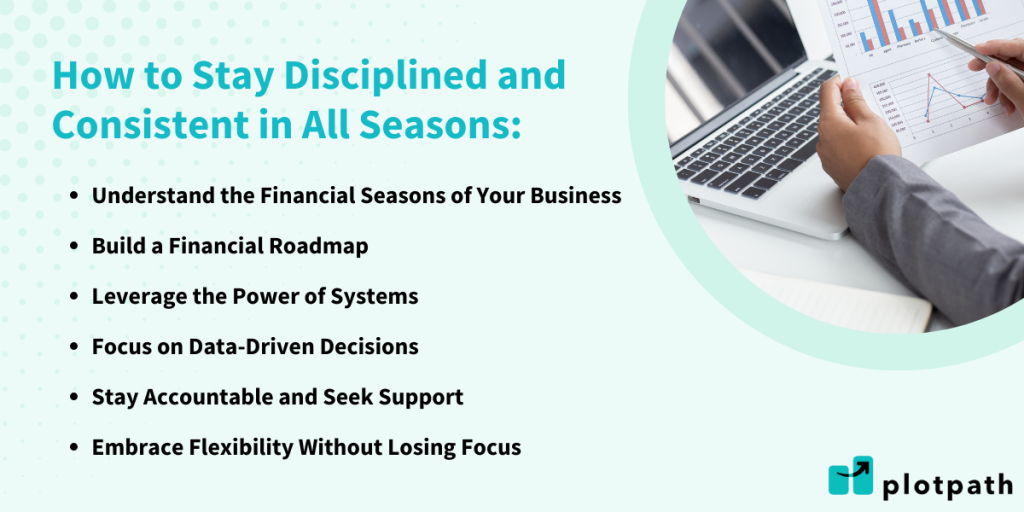
1. Understand the Financial Seasons of Your Business
Every company experiences its own set of “financial seasons”—periods of growth, plateaus, contractions, and recoveries. Think of them as the natural cycles of business life, each bringing a unique set of challenges and opportunities.
- Growth Season: When demand for your products or services is high, revenue typically surges. However, increased demand often brings higher costs (hiring, production, marketing) and can strain your cash flow if you’re not prepared.
- Plateau Season: Revenues stabilize, but expenses may creep up or stay the same. This can be a good time to fine-tune your processes and shore up profits before the next big move.
- Contraction Season: Sales slow down, and cash flow can become tight. This is often when you need to be particularly vigilant with cost control and find creative ways to maintain financial health.
- Recovery Season: After a dip, you may start to see incremental improvements. Reinvesting wisely during a recovery can set the stage for the next growth phase.
By recognizing these patterns, you can anticipate and plan for revenue fluctuations, better manage expenses, and position yourself for long-term sustainability.
For instance, if you know a slow season is ahead, proactively boost your reserve funds or negotiate with suppliers. But, if you’re in a growth period, prepare for higher operating costs and align your team around efficient expansion strategies.
2. Build a Financial Roadmap
A solid financial roadmap keeps you focused and confident, even when unexpected changes arise. Setting clear short-term and long-term goals offers a sense of direction, allowing you to measure progress and pivot if necessary.
- Short-Term Goals: These might include monthly or quarterly targets for revenue, profit margins, or cost reduction. They should feel manageable and support you in running the business smoothly.
- Long-Term Goals: These tend to be more aspirational—like opening a second location or reaching a certain revenue milestone in three to five years. These goals guide you toward strategic decisions that foster sustainable growth.
Budgeting is a crucial part of this roadmap. A well-crafted budget accommodates seasonal fluctuations, ensuring you’re neither overspending during a slow period nor underinvesting during a growth phase.
The key is flexibility—regularly review your budget and adjust it based on performance, external factors, and your changing business needs.
3. Leverage the Power of Systems
When it comes to staying disciplined, good systems can be a lifesaver. Manual tracking of every invoice, payment, or expense is time-consuming and prone to human error. Plus, it’s hard to stay motivated and diligent. Make it easier for yourself and your team with automation!
Automating as many financial tasks as possible helps you stay consistent, reduces stress, and ensures accuracy.
- Bookkeeping Software: Tools like QuickBooks or Xero streamline day-to-day accounting tasks, making it simpler to track revenue, expenses, and cash flow in real-time.
- Invoicing and Billing Systems: Automated invoicing ensures timely billing and follows up with reminders for overdue payments—an essential element for maintaining healthy cash flow.
- Reporting Dashboards: Real-time dashboards let you see your key metrics in a single glance, helping you make quick, data-driven decisions.
By investing in reliable systems, you free up mental space to focus on strategic decisions rather than getting bogged down in administrative tasks. This consistency also helps you spot financial red flags sooner, making it easier to take corrective action.
4. Focus on Data-Driven Decisions
While gut feelings and intuition can be useful, they shouldn’t be the sole drivers of your financial strategy. Consistent tracking and analysis of financial data provide you with a clear understanding of your company’s performance, especially during unpredictable seasons.
- Revenue Trends: Monitor patterns to forecast future sales and identify potential opportunities or risks.
- Expense Analysis: Break down costs to see where every dollar is going. This allows you to optimize spending and increase profitability.
- Cash Flow Monitoring: Keep an eye on monthly cash inflows and outflows, ensuring you have enough liquidity to weather unexpected costs or invest in new opportunities.
Key Metrics Every Business Leader Should Consider Monitoring
Using data from these metrics can be a starting point for most business leaders:
- Gross Profit Margin: How efficiently you’re producing goods or delivering services.
- Net Profit Margin: The portion of revenue left after covering all expenses, giving a clear view of overall profitability.
- Days Sales Outstanding (DSO): The average time it takes customers to pay, highlighting potential cash flow bottlenecks.
- Customer Acquisition Cost (CAC): Total cost of acquiring a new customer, helping you fine-tune marketing and sales strategies.
- Customer Lifetime Value (LTV): Estimates how much revenue an average customer will bring in over the course of their relationship with your company.
- Return on Investment (ROI): Evaluates the profitability of specific projects or initiatives so you can allocate resources more effectively.
Regularly reviewing this data helps you make swift, evidence-based decisions that can keep your business resilient in changing market conditions.
5. Stay Accountable and Seek Support
Discipline often comes down to accountability. It’s much easier to stay on track when you have someone—or something—holding you accountable for meeting your financial goals. This could mean setting up regular check-ins with a finance partner, working with a mentor, or joining a mastermind group of fellow entrepreneurs who share similar objectives.
Financial advisors or fractional CFO services can also provide valuable external perspectives. By partnering with PlotPath, for instance, you tap into a dedicated team that specializes in financial reporting, forecasting, and strategy.
Having an expert sounding board helps you see spots you might miss in the day-to-day, refine your approach, and maintain strong financial habits even when life gets chaotic.
6. Embrace Flexibility Without Losing Focus
No matter how solid your plan, unexpected shifts can occur at any time. A new competitor might enter your market, or economic changes could alter consumer behaviors.
Here’s an important mental shift: rather than viewing curveballs as setbacks, treat them as opportunities to refine your financial habits.
Here’s how you can start:
- Adapt Your Goals: If the business environment changes, don’t hesitate to adjust your short-term and long-term targets to remain aligned with reality.
- Revisit Budgets: Schedule periodic reviews—monthly or quarterly—to make sure your spending still makes sense given current conditions.
- Iterate and Improve: Use new data to hone your financial strategies and keep your core objectives consistently at the forefront.
Staying flexible ensures you can pivot quickly without losing sight of the bigger picture, allowing your business to thrive through any season.
Focus on Discipline Throughout the Year
Financial discipline and consistency are the backbone of a healthy, thriving business. By understanding the cyclical nature of revenue, building a strong roadmap, leveraging automated systems, and making data-driven decisions, you can weather virtually any financial storm.
If you’re ready to start building systems and habits that will keep your financial health strong in every season, PlotPath is here to help. Explore our tools and resources to support your financial journey in every season.
